
Israel–Iran Conflict: Navigating Energy Chokepoint Risks for Markets
The Ripple Effect of Crude Oil Prices on India
June 24, 2026
Social Share
Understanding the Choke Point: Why Strait Matters Event: Strait of Hormuz Closure
- Iran’s IRGC Navy announced full closure of the Strait of Hormuz
- No vessels permitted to transit
- The Strait of Hormuz is the world’s most critical arterial corridor for energy and chemical logistics. The abrupt suspension triggers an immediate and violent supply shock to the global economy
Strategic Importance: Dependance on 21-mile Channel
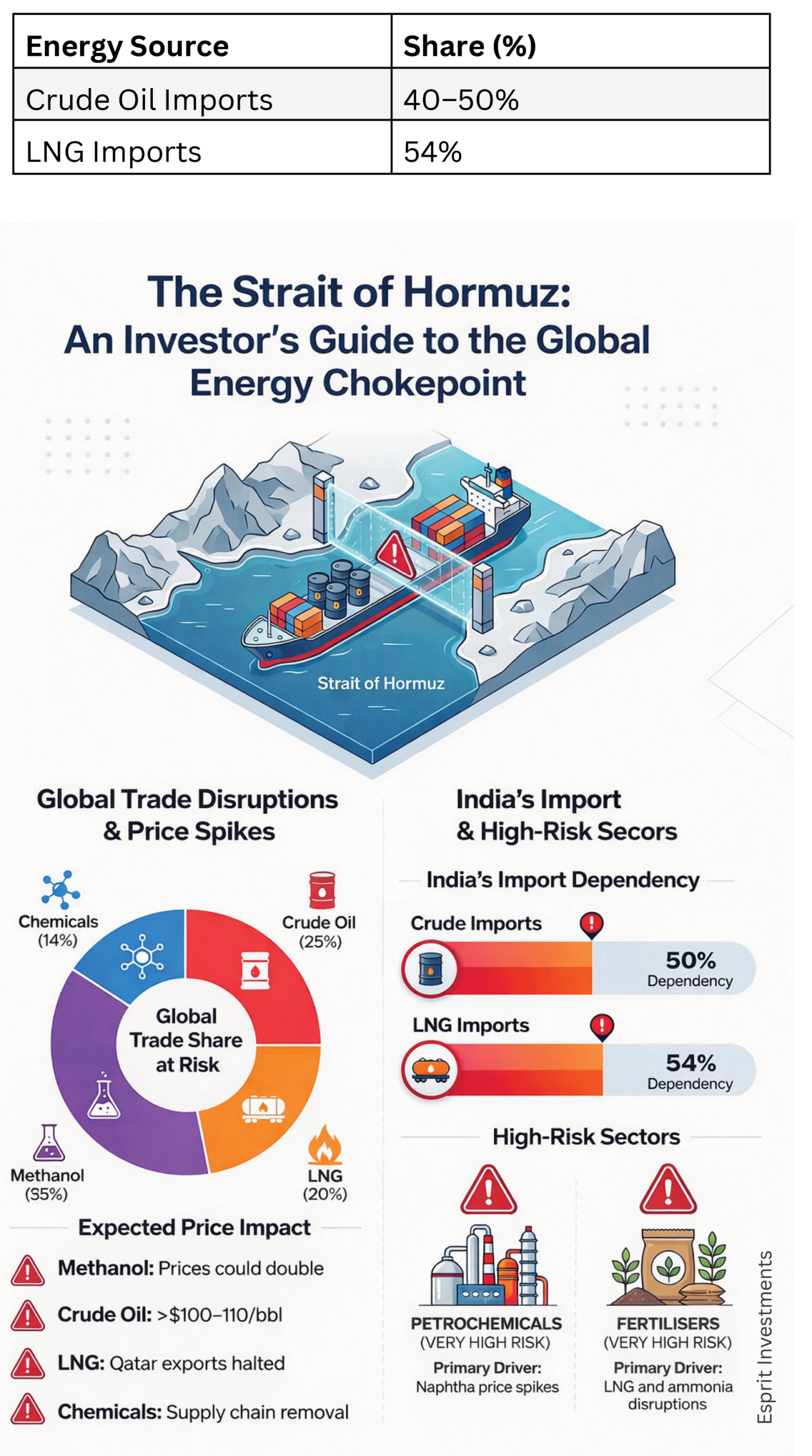
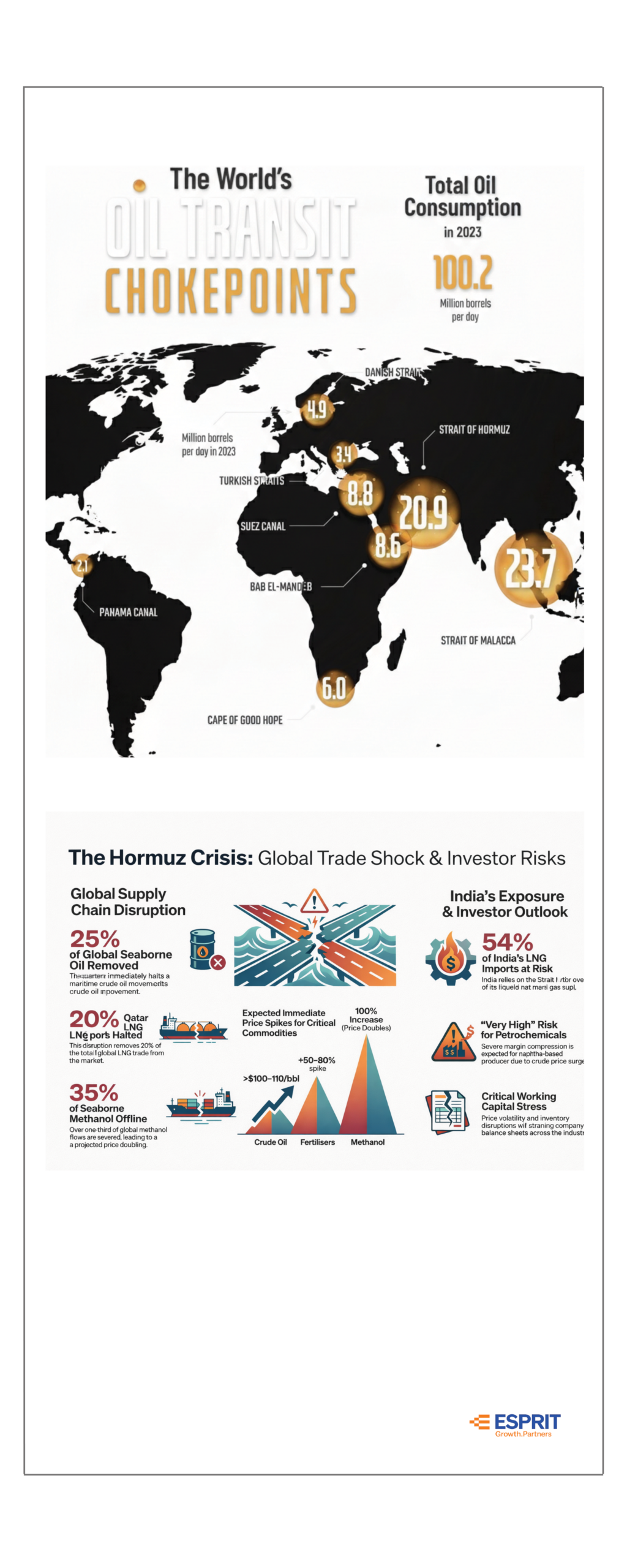
- 20M barrels of oil/day, i.e., 25% of Seaborne Crude Oil
- 15%-20% of LNG pass through this chokepoint.
- 35% of Seaborne Methanol
- 14% of Total Seaborne Chemicals
Immediate Market Impact
- Brent crude potentially >$100.
- At >$125, global economic activity risks paralysis, not slowdown.
Global Economic Fallout
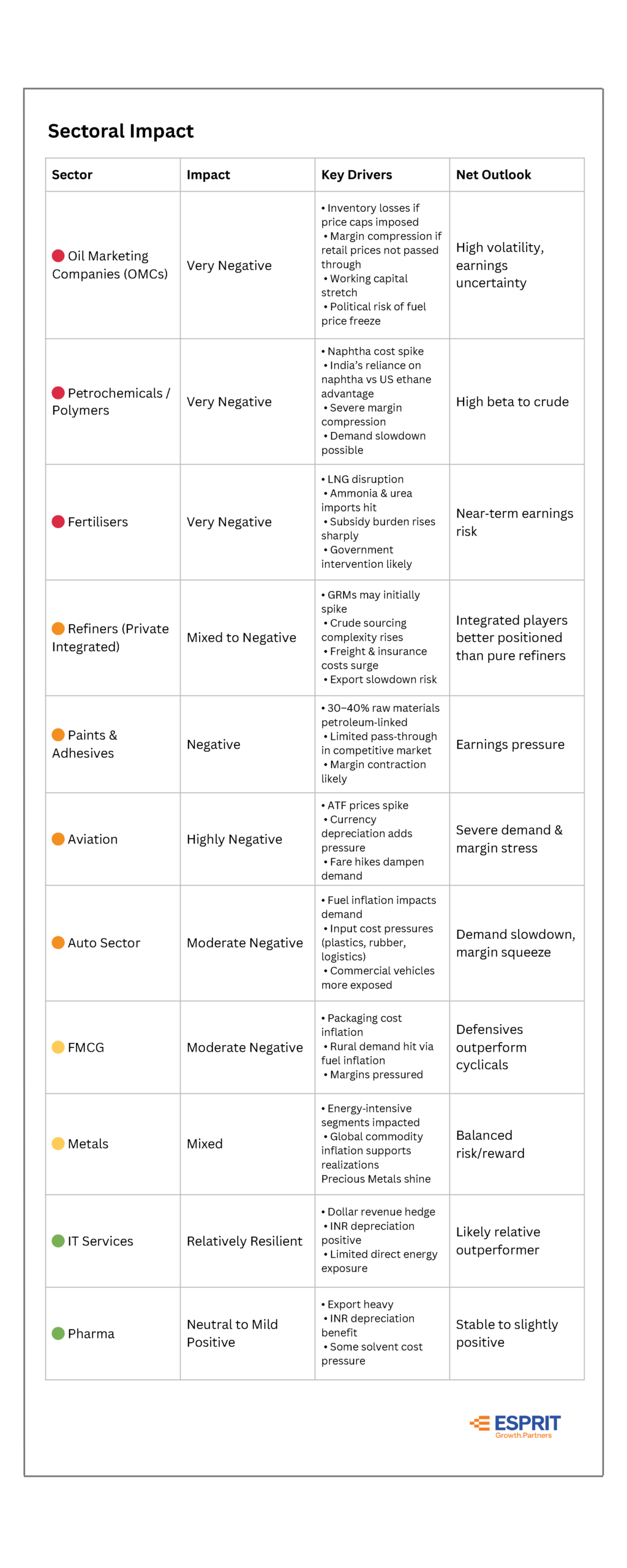
- Asia’s factories reliant on imported crude could face shutdowns.
- Airlines hedged at $85 fuel costs face insolvency risk.
- Europe, still dependent on LNG, faces acute shortages.
- Global consumers face surging energy prices.
Strategic Context
- Iran’s military capacity degraded: air defenses destroyed, generals lost, missiles intercepted.
- Closure seen as last economic weapon leveraging geography over military strength.
Global Trade Disruptions and Market Impact
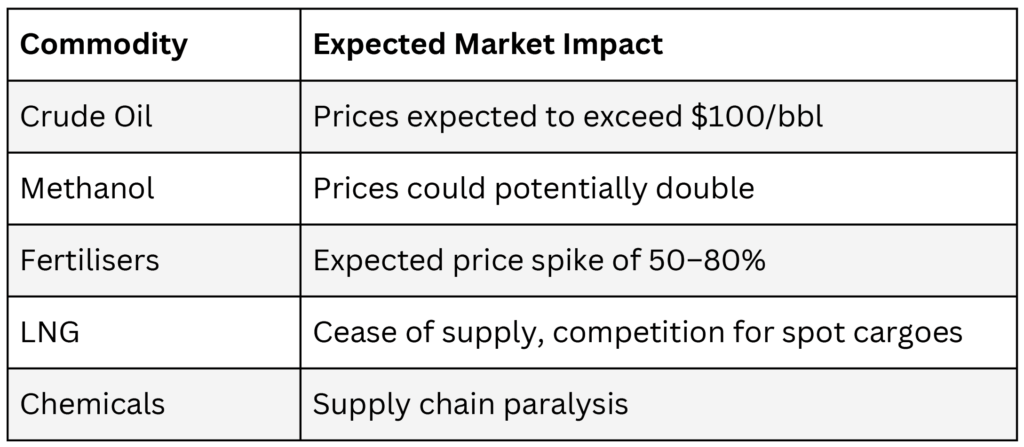
The suspension of trade through the Strait of Hormuz removes vital energy volumes from global supply, with Qatar’s LNG exports hit hardest. When Qatari cargoes disappear, the impact extends far beyond its direct buyers European and Asian markets are forced into fierce competition for limited spot shipments, driving prices sharply higher. This scarcity cascades through the energy value chain, inflating costs across all downstream derivative & product tied to these primary fuels.
India’s Vulnerability: The Dependency Factor
India is uniquely and acutely exposed to this disruption. Unlike economies with more diversified geography, India’s energy security isstructurally tied to the Persian Gulf. A significant portion of its primaryenergy imports must pass through the Hormuz choke point, making anyclosure a direct threat to domestic industrial stability.
What Investors should watch
India Macro Impact
- First-order impact: Crude > $100 triggers external sector shock, CAD widening and INR depreciation.
- Second layer: Inflation transmission (direct fuel, indirect logistics/food), fiscal stress (fertiliser subsidy, excise dilemma), and growth drag.
- Third layer: Bond market impact (yields rise, RBI delays easing), RBI policy response (FX intervention, liquidity) & banking system stress.
- Outer layer: Comparison to past crises viz 2008 oil spike, 2013 taper tantrum, 2022 Russia-Ukraine, showing how a Hormuz closure could combine all three.
Ongoing Monitoring
This analysis reflects conditions as of March 28, 2026. Given the dynamic nature of global energy markets, stakeholders should maintain continuous monitoring of crude price developments and adjust strategies accordingly. ESPIRT will continue to provide updated analyses as market conditions evolve.
