From Barrel to Budget
The Ripple Effect of Crude Oil Prices on India
June 24, 2026
Social Share
Executive Summary
The report “From Barrel to Budget: The Ripple Effect of Crude Oil Prices on India” analyzes how rising crude oil prices- driven by geopolitical tensions (notably Israel–Iran conflict and potential Hormuz disruption)- impact India’s economy across inflation, growth, fiscal stability, and sectors.
Base: Brent $112.57/bbl · INR ₹94.71/USD · CPI ~5.4% (est.)
Israel–Iran War · Hormuz Chokepoint · CPI, GDP, INR & Sector Analysis

Current Macro Snapshot
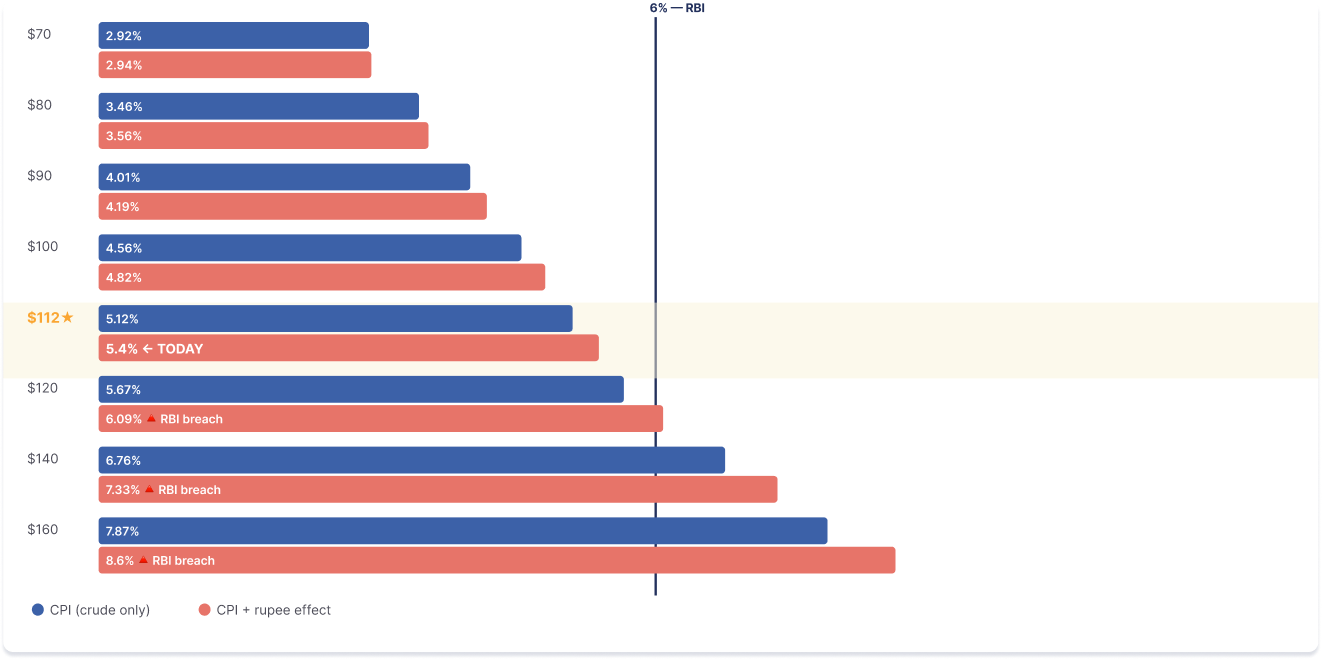
Headline: Every $10/bbl rise adds ~55–60 bps to India's CPI. The $45.57 rise from Jan's $67 base adds ~250 bps; the rupee falling from ₹86.8 to ₹94.71 adds another ~66 bps - a combined 315 bps shock pushing CPI toward 5.4–5.9%. RBI's upper tolerance band is 6%.
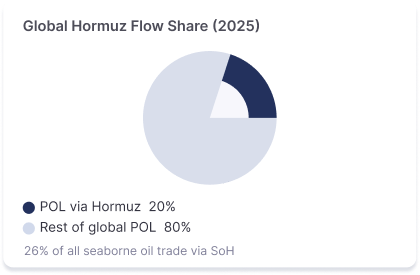
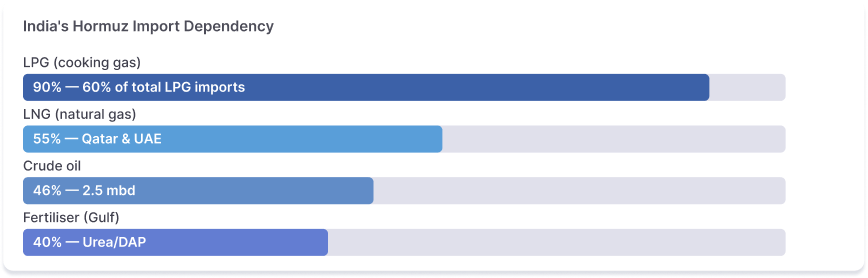
India's Hormuz Dependency — Structural Vulnerability
India is highly dependent on energy imports that pass through the Strait of Hormuz, making it vulnerable to global disruptions. A large share of LPG (about 60–90%), LNG (around 55% from Qatar and UAE), and crude oil (about 46%) comes through this route. This means if there is any conflict or blockage in Hormuz, oil supply can drop and prices can rise quickly. Since India imports most of its oil, even a small disruption can increase fuel costs, raise inflation, and impact the overall economy significantly.
CPI Inflation Ladder - Every $10/bbl Crude Rise
CareEdge elasticity: 55–60 bps per $10/bbl · Base CPI Jan 2026 = 2.75% · RBI upper band = 6%
The Rupee Double Whammy
Extra CPI from INR Depreciation (at $112/bbl) – Re.1 weakening = +8 bps CPI independently
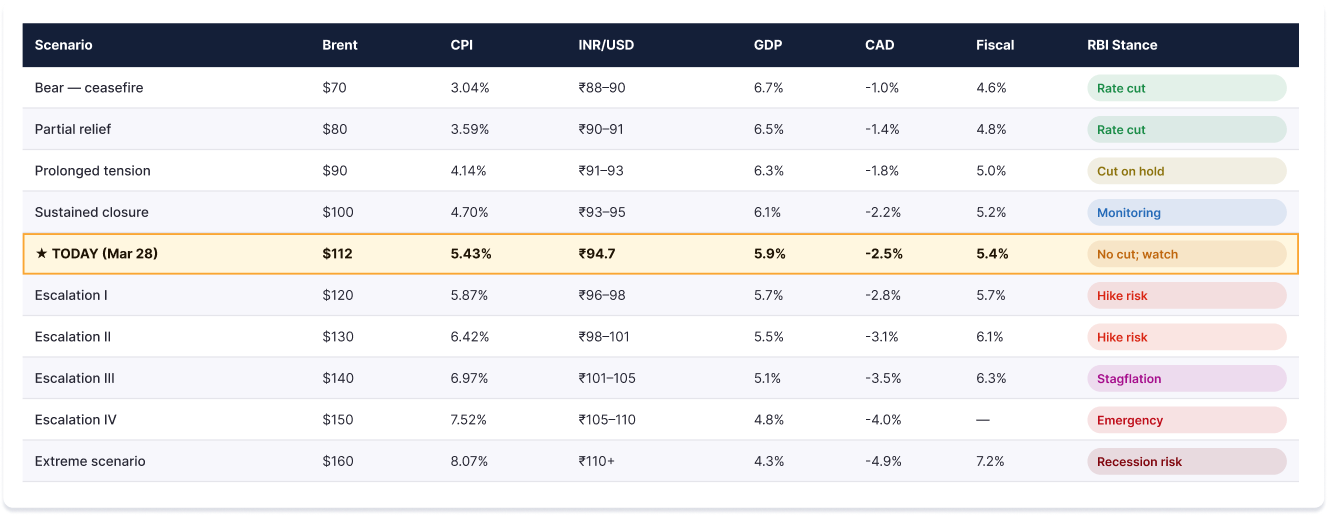
Complete Scenario Matrix - Brent $70 to $160
Sources: Goldman Sachs, MUFG Research, CareEdge Global, Bank of Baroda · ★ = Current position Mar 28, 2026
Ongoing Monitoring
This analysis reflects conditions as of March 28, 2026. Given the dynamic nature of global energy markets, stakeholders should maintain continuous monitoring of crude price developments and adjust strategies accordingly. ESPIRT will continue to provide updated analyses as market conditions evolve.