
India’s G-Sec Tax Exemption for FIIs — A Reactive Measure That Misses the Mark
July 2, 2026
Social Share
Executive Summary
The government, through an ordinance effective April 1, 2026, has exempted foreign institutional investors from capital gains tax, interest income tax, and withholding tax obligations on government securities; bypassing Parliament entirely. The stated objectives are to arrest the rupee’s slide and stem foreign capital outflows.
The Urgency Signal
The ordinance route is itself the story. Proactive structural reform builds credibility; panicdriven ordinances signal that the situation has outpaced the policymaker’s thinking. More damaging, piecemeal reactive measures do not reassure investors; they do the opposite. Each such intervention is a visible admission that the
Piecemeal reactive measures do not reassure investors; they do the opposite. Each such intervention is a visible admission that the earlier framework was flawed. Confidence, once eroded, is not restored by tax tinkering.
The Yield Math Doesn’t Add Up
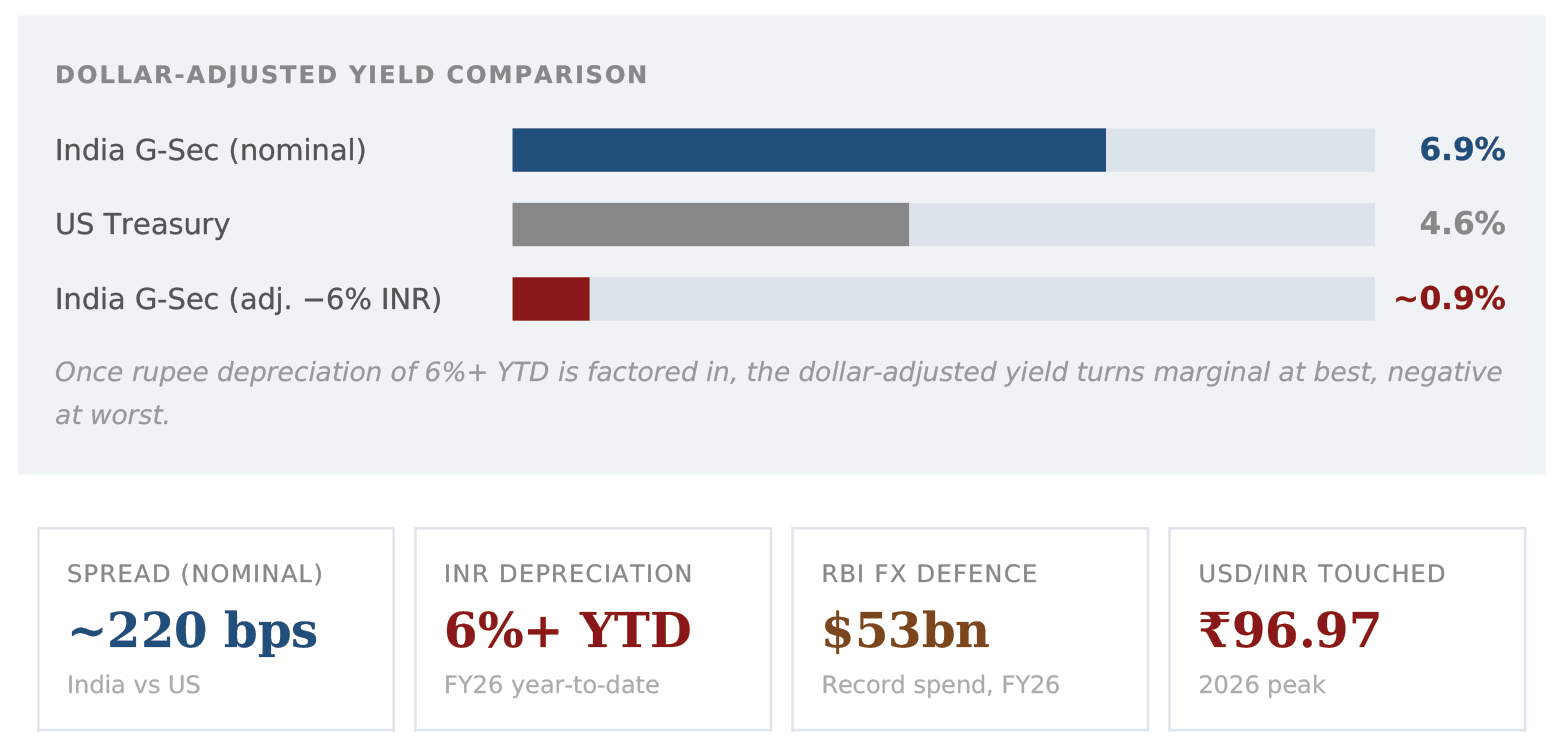
Indian G-Secs at 6.8–7% against US Treasuries at 4.6% appear to offer a ~220 basis point spread. But for any dollar-book investor, this comparison is an illusion. The rupee has depreciated over 6% year-to-date, and the RBI spent a record $53 billion defending the currency in FY26; a pace that is clearly unsustainable. Once currency depreciation is factored in, the dollar-adjusted yield on Indian bonds turns marginal at best, negative at worst. No serious global fixed income allocator will find a withholding tax exemption transformative when the underlying currency is in visible distress.
Deteriorating Macro Backdrop
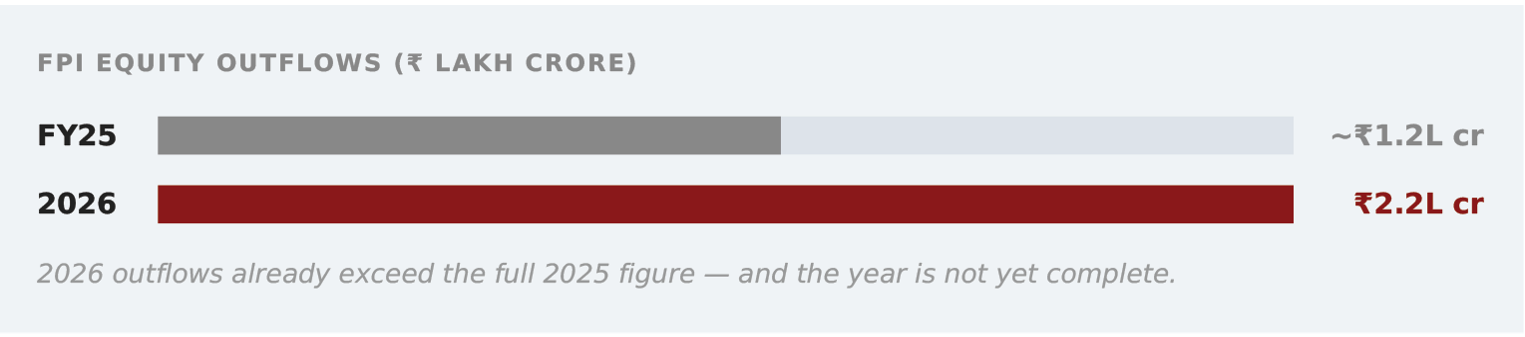
FPI equity outflows have touched ₹2.2 lakh crore in 2026 alone, already surpassing the fullyear 2025 figure. The rupee has touched ₹96.97 against the dollar. Elevated global oil prices are widening the current account deficit, and US rates staying higher for longer continue to make dollar assets relatively attractive. Global allocators are not avoiding India because of tax friction; they are avoiding India because the macroeconomic risk-reward has structurally weakened.
The Real Crisis: Domestic Paralysis
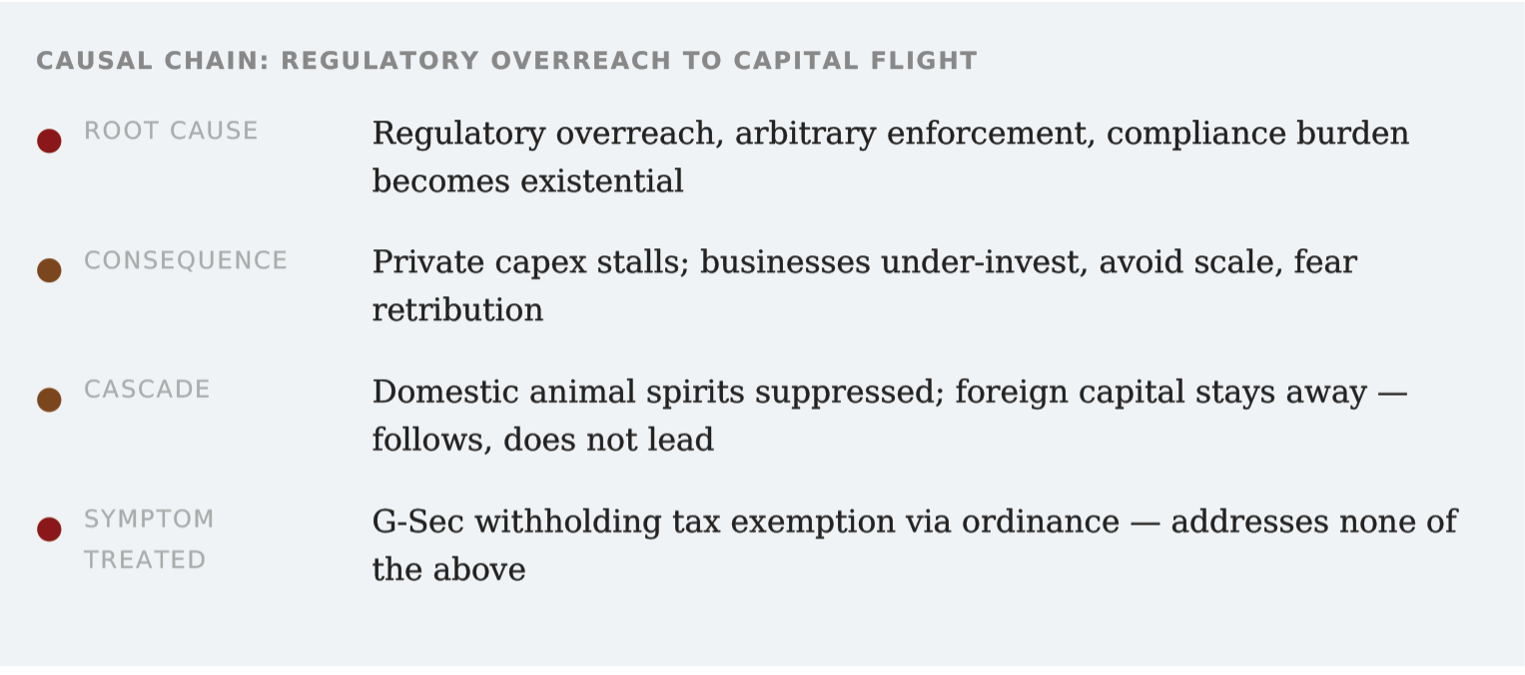
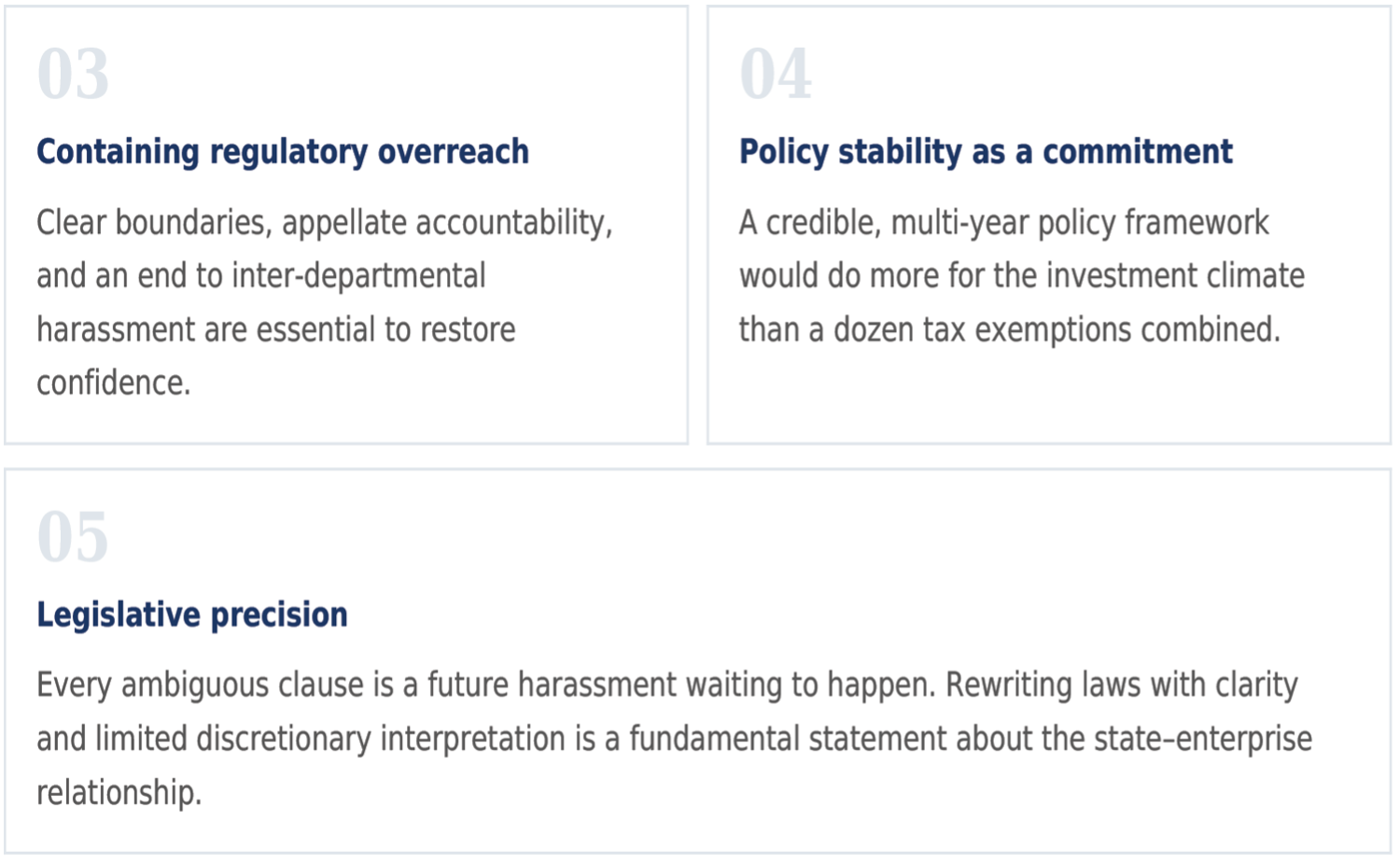
Foreign investor hesitation is merely the external symptom of a deeper domestic malaise. Private capex in India has stalled not from lack of opportunity, but from fear; of regulatory retribution, arbitrary enforcement, and a compliance burden that has become existential for many businesses. Indian legislation has historically been drafted with deliberate ambiguity, leaving wide discretionary powers with regulators and enforcement authorities. The practical consequence is that any business can be found in technical violation of something, at any time. This design; whether intentional or a product of legislative carelessness; has functioned as a tool of harassment rather than a framework for governance.
The result is an economy where animal spirits have been domesticated by regulatory fear. Businesses under-invest, avoid scale, and keep a low profile rather than expand. When domestic capital operates in this kind of environment, foreign capital will not lead; it will stay away.
What a Reset Would Actually Look Like
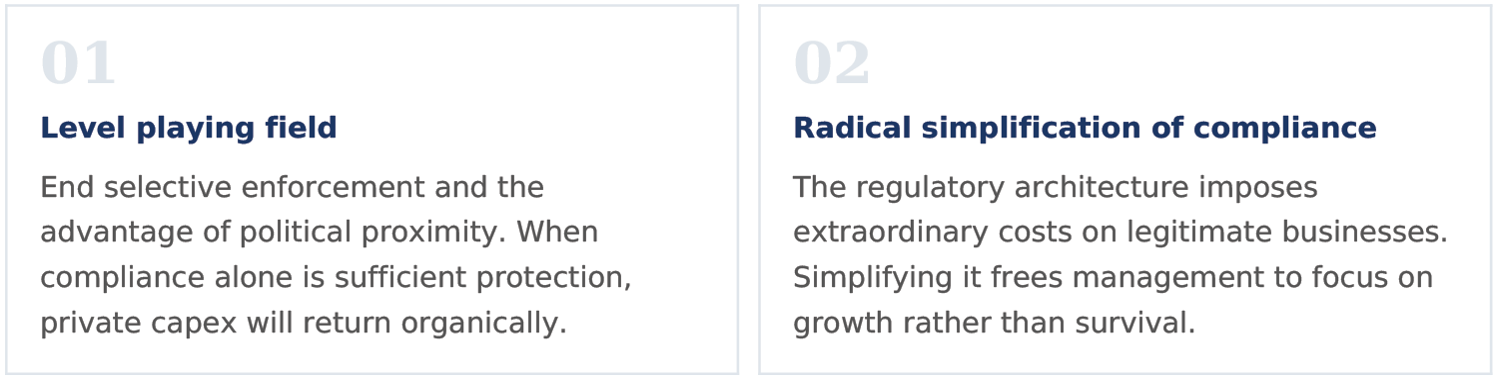
India’s investment problem is not a tax problem; it is a perception problem rooted in genuine structural failure. Meaningful recovery requires more than another ordinance. It requires a visible, credible, and sustained demonstration that the rules of the game have fundamentally changed.
Conclusion
India has a serious and worsening perception problem in global capital markets — built over years of unpredictability, regulatory overreach, and a business environment where the state has too often functioned as adversary rather than enabler. Small reactive measures, however well-intentioned, compound the confidence deficit they are meant to address.
